

Read Time: 5 Min
Common Lifestyle Diseases and Their Prevention
Abstract
Lifestyle diseases, or non-communicable diseases (NCDs), have become a major health problem in both developed and developing countries. These diseases are mainly caused by unhealthy habits such as poor diet, lack of physical activity, smoking, and alcohol use. The most common lifestyle diseases include obesity, diabetes mellitus, hypertension, cardiovascular diseases, and certain cancers. This article discusses the causes, effects, and preventive measures of these conditions, emphasizing how small but consistent lifestyle changes can make a major difference in long-term health.
Introduction
Over the past few decades, lifestyle-related diseases have increased rapidly due to urbanization, changing food habits, and sedentary behavior. People are now living longer but often with chronic illnesses that reduce their quality of life. According to the World Health Organization (WHO), around 74% of global deaths are caused by non-communicable diseases, most of which are preventable.
Unlike infectious diseases, lifestyle disorders develop gradually, often over several years, and are closely linked to the way we live. Preventing them requires awareness, self-discipline, and public health support to encourage healthier choices in diet, physical activity, and daily behavior.
Common Lifestyle Diseases
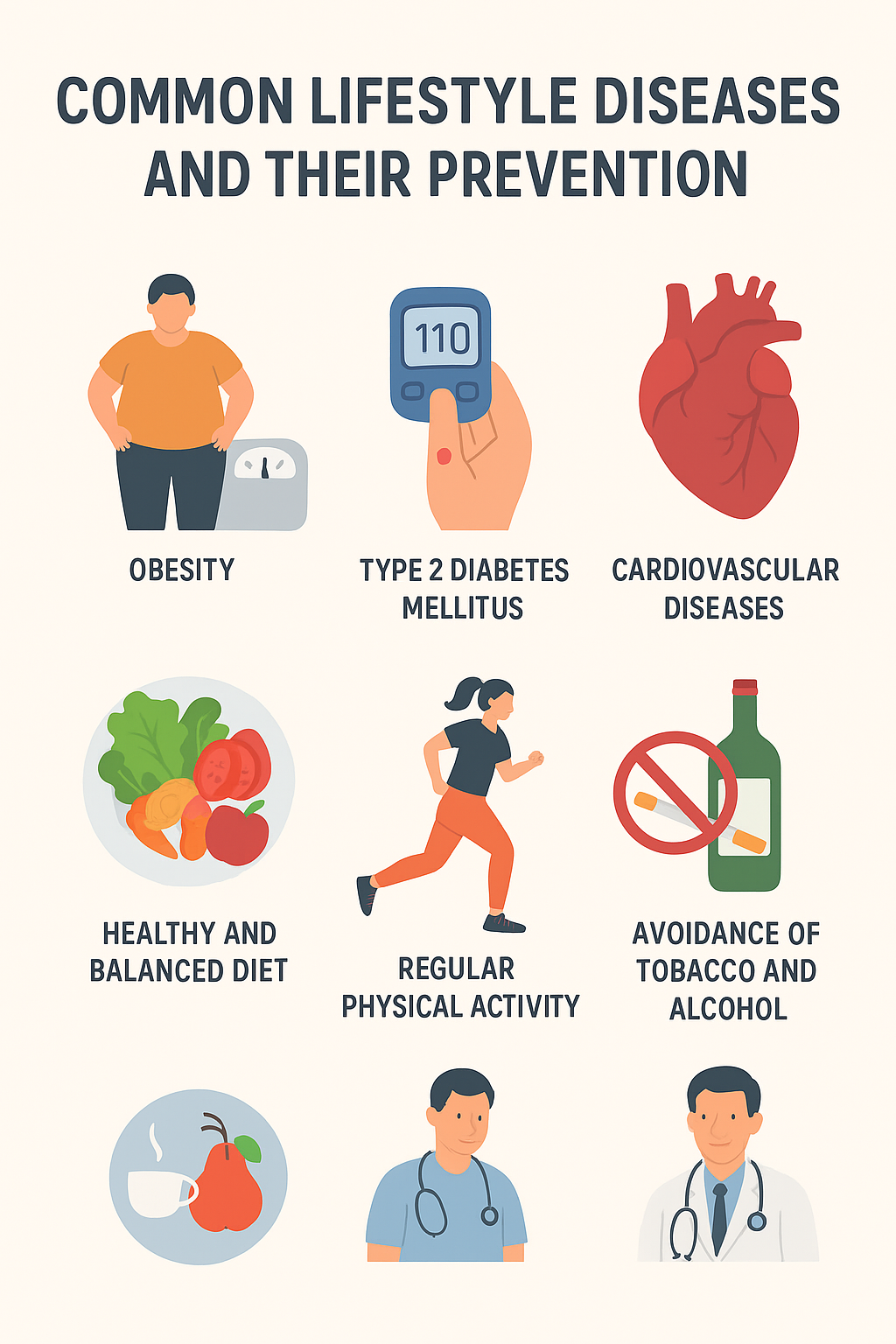
1. Obesity
Obesity occurs when energy intake exceeds energy expenditure, leading to abnormal fat accumulation. It is measured using Body Mass Index (BMI), with a value of 30 or more considered obese. Modern factors like processed foods, stress eating, and reduced physical activity contribute significantly. Obesity increases the risk of diabetes, hypertension, heart disease, and certain cancers.
2. Type 2 Diabetes Mellitus
Type 2 diabetes is one of the most common metabolic disorders today. It results from insulin resistance and an unhealthy diet high in sugars and fats. Many patients remain undiagnosed until complications appear, such as neuropathy or cardiovascular problems. Regular exercise, a balanced diet, and maintaining a healthy body weight are proven to prevent or delay its onset.
3. Cardiovascular Diseases
Cardiovascular diseases (CVDs) include conditions like coronary artery disease, stroke, and heart failure. They are mainly caused by high blood pressure, high cholesterol, smoking, and a sedentary lifestyle. Diets rich in saturated fats and salt, along with stress and lack of exercise, increase the risk. A heart-healthy lifestyle can prevent most of these diseases.
4. Hypertension
Known as the “silent killer,” hypertension often develops without noticeable symptoms. Persistent high blood pressure can damage blood vessels and vital organs like the heart, kidneys, and brain. Reducing salt intake, maintaining a healthy weight, managing stress, and regular exercise are essential preventive steps.
5. Certain Cancers
Some cancers, such as lung, colorectal, breast, and liver cancers, are strongly linked to lifestyle choices. Tobacco use, alcohol, poor diet, and physical inactivity are major contributors. Preventive actions like quitting smoking, eating antioxidant-rich foods, and undergoing regular screenings significantly reduce risk.
Prevention Strategies
1. Healthy and Balanced Diet
Nutrition plays the most crucial role in preventing lifestyle diseases. A balanced diet should include fresh fruits, vegetables, whole grains, lean proteins, and healthy fats. Reducing sugar, salt, and processed food intake lowers the risk of obesity, diabetes, and heart disease. Hydration and portion control are also important.
2. Regular Physical Activity
Physical inactivity is one of the biggest risk factors for NCDs. Regular exercise strengthens the heart, improves metabolism, and reduces stress. The WHO recommends at least 150 minutes of moderate exercise per week. Activities like brisk walking, swimming, yoga, or cycling are simple yet effective.
3. Avoiding Tobacco and Alcohol
Tobacco and excessive alcohol consumption are among the leading causes of preventable deaths worldwide. Smoking damages nearly every organ in the body, while alcohol contributes to liver disease, hypertension, and certain cancers. Complete avoidance is the best preventive strategy.
4. Managing Stress and Mental Health
Stress is often underestimated as a health risk. Chronic stress can increase blood pressure, cause hormonal imbalances, and lead to unhealthy habits like overeating or smoking. Practicing relaxation techniques such as yoga, meditation, or deep breathing helps in maintaining both mental and physical health.
5. Regular Medical Check-Ups
Routine health screening allows early detection of conditions like diabetes, hypertension, or high cholesterol. Regular monitoring encourages timely lifestyle corrections and medical interventions, preventing complications in the long run.
Conclusion
Lifestyle diseases are among the most serious health issues today, but they are largely preventable. Simple choices—eating healthy food, staying active, avoiding tobacco and alcohol, and managing stress—can drastically reduce the risk. As future healthcare professionals, it is our responsibility not only to treat such conditions but also to educate and motivate people to live healthier lives. Prevention truly is better than cure, and in the case of lifestyle diseases, prevention begins with awareness and consistent healthy habits.
References
- World Health Organization. (2023). Noncommunicable diseases: Key facts. Retrieved from https://www.who.int/news-room/fact-sheets/detail/noncommunicable-diseases
- GBD 2021 Risk Factors Collaborators. (2022). Global burden of disease attributable to risk factors, 1990–2021.The Lancet, 400(10364), 123–156.
- Hu, F. B. (2021). Diet and lifestyle influences on risk of chronic diseases. The New England Journal of Medicine, 345(11), 790–797.
- American Heart Association. (2022). Prevention and treatment of cardiovascular disease.
Case studies available upon request.
Please provide information on how we can help you and we will be in touch to help meet your requirements.