
Read Time: 5 Min
Anxiety vs Stress: Understanding the Difference
Author :-Mr. Zeeshan Fayaz .
Clinical Pharmacologist & Toxicology ,
Certified Mental Health Counselor ,
Member of American clinical Pharmacological Society ,
Member of Indian Pharmacological Society (IPS).
Introduction
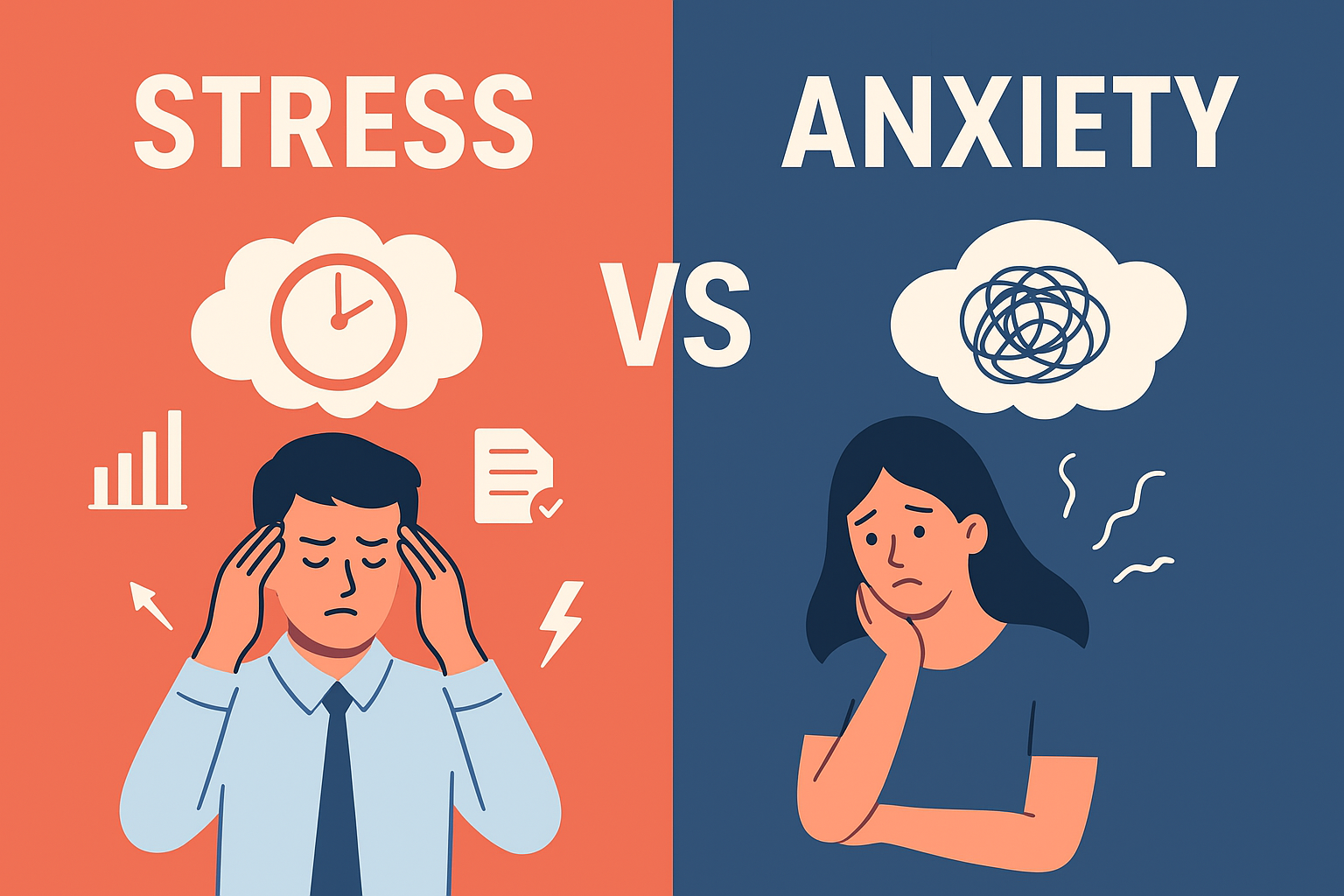
Stress and anxiety are two terms that most people use interchangeably, yet in clinical practice they refer to different emotional and physiological experiences. For medical students and healthcare professionals, being able to distinguish between the two is important for proper assessment and treatment. Stress usually develops as a response to external pressures, while anxiety tends to arise internally and often continues even without a clear trigger. This article explains how stress and anxiety differ, how they affect the body, and why identifying them correctly matters in medical settings.
Understanding Stress
Stress is the body’s normal reaction to a specific demand or challenge. These demands—called stressors—can come from academics, work, relationships, or even environmental factors. In many cases, stress helps people stay alert and motivated, especially in short bursts.
Physiological Response
When a person encounters a stressor, two main systems are activated:
-
The sympathetic nervous system (SNS): This produces the immediate “fight-or-flight” response by releasing adrenaline and noradrenaline.
-
The hypothalamic–pituitary–adrenal (HPA) axis: This leads to the release of cortisol, which keeps the body alert for longer periods.
Although these reactions are helpful in the short term, they can become harmful if the stress continues for too long.
Clinical Features of Stress
Stress usually has:
-
a clear cause,
-
a short duration, and
-
effects that may be either positive (eustress) or negative (distress).
Common symptoms include irritability, headaches, trouble sleeping, muscle tension, and difficulty focusing. These symptoms typically improve once the stressor is resolved or managed.
Understanding Anxiety
Anxiety is different from stress because it does not always require an external trigger. It is a persistent state of worry or fear that often revolves around potential future events rather than present challenges. Anxiety becomes a concern when it is excessive, long-lasting, or begins to interfere with daily functioning.
Neurobiological Aspects
Anxiety involves several interconnected brain regions:
-
Amygdala: Often becomes overactive, intensifying fear responses.
-
Prefrontal cortex: May have reduced ability to regulate emotional reactions.
-
Hippocampus: May process threats inaccurately during chronic anxiety.
These changes cause anxiety to feel ongoing, even when there is no clear external stressor.
Clinical Features of Anxiety
Anxiety is usually:
-
long-term,
-
less connected to identifiable causes, and
-
accompanied by excessive worry or fear.
Symptoms may include restlessness, palpitations, sweating, stomach discomfort, trouble concentrating, and avoidance behavior. Severe anxiety can trigger panic attacks, which may involve sudden chest discomfort, shortness of breath, or intense fear.
Clinical Implications
Differentiating stress from anxiety is important because the two conditions require different management strategies.
1. Diagnostic Considerations
Stress is a normal response, but if it becomes chronic, it can contribute to anxiety disorders such as Generalized Anxiety Disorder (GAD) or Panic Disorder. Understanding how long the symptoms last, what triggers them, and how they affect daily life helps guide accurate diagnosis.
2. Treatment Approaches
Managing Stress:
Stress is often managed by addressing the external factors that are causing it. Helpful strategies include time management, regular exercise, relaxation techniques, improving sleep, and making lifestyle adjustments.
Managing Anxiety:
Because anxiety is more internal and persistent, treatment tends to focus on long-term strategies such as:
-
Cognitive Behavioral Therapy (CBT)
-
Mindfulness-based therapies
-
Medications such as SSRIs or SNRIs
-
Psychoeducation and supportive counseling
3. Preventing Long-Term Effects
Both prolonged stress and untreated anxiety can lead to serious health issues, including cardiovascular disease, weakened immunity, sleep problems, and in some cases substance misuse. Early recognition and intervention can prevent these outcomes.
When Stress Turns Into Anxiety
Stress can gradually turn into anxiety when the body remains in a heightened state of alertness even after the stressor has passed. Signs that stress is evolving into anxiety include ongoing worry, difficulty relaxing, physical symptoms like rapid heartbeat, and avoidance of normal activities. At this point, professional evaluation is recommended.
Conclusion
While stress and anxiety share similar symptoms and biological pathways, they differ in important ways. Stress is usually a short-term response to an external challenge, while anxiety is a more persistent internal experience that can continue even in the absence of a clear cause. Understanding these differences helps medical professionals provide better patient care and promotes earlier, more effective treatment. As mental health concerns continue to grow, recognizing how stress and anxiety operate has become an essential part of modern medical practice.
References (APA Style)
American Psychiatric Association. (2013). Diagnostic and statistical manual of mental disorders (5th ed.).
McEwen, B. S. (2007). Physiology and neurobiology of stress and adaptation: Central role of the brain. Physiological Reviews, 87(3), 873–904.
Sapolsky, R. M. (2004). Why zebras don’t get ulcers (3rd ed.). Holt Paperbacks.
Spielberger, C. D. (2010). State–Trait Anxiety Inventory. In I. Weiner & W. Craighead (Eds.), The Corsini Encyclopedia of Psychology (pp. 1–3). Wiley.
National Institute of Mental Health. (2023). Anxiety disorders. https://www.nimh.nih.gov
Case studies available upon request.
Please provide information on how we can help you and we will be in touch to help meet your requirements.