
Read Time: 4 Min
Common Causes of Chest Pain and When You Should Seek Medical Help
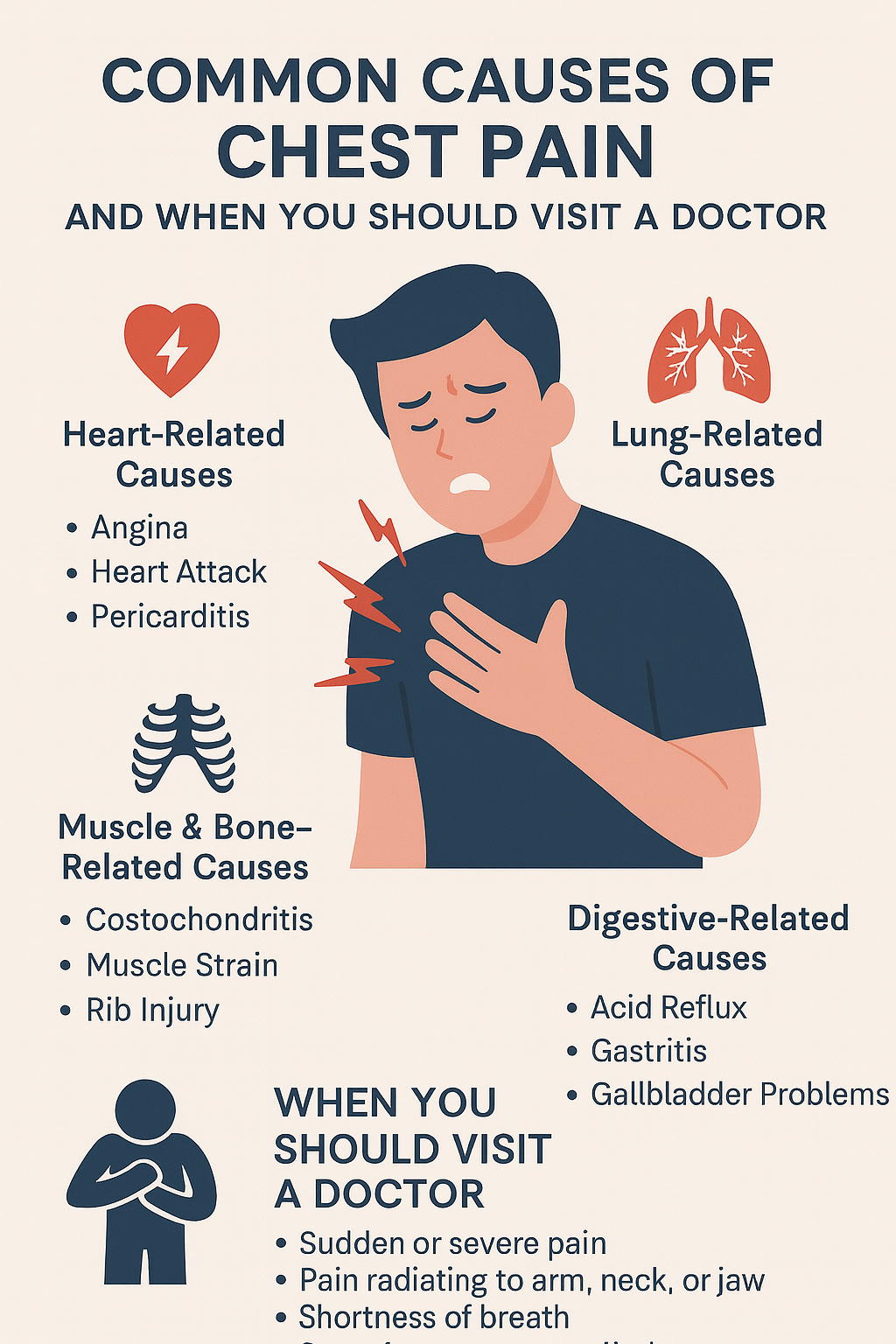
Chest pain is something almost everyone worries about, and for a good reason. The discomfort can come from many different parts of the body — the heart, lungs, digestive system, or even the muscles between the ribs. Some causes are harmless, while others need urgent treatment. Understanding the common reasons can help you decide when it’s important to consult a doctor.
What Chest Pain Actually Means
Chest pain isn’t always severe. It may feel like pressure, burning, tightness, or a sharp pinching sensation. The exact feeling and the area where the pain appears usually give important clues about the underlying cause.
Common Reasons Behind Chest Pain
1. Heart-Related Causes
These are the most serious and should never be ignored.
Angina
This happens when the heart doesn’t get enough blood supply. The pain usually feels like pressure or heaviness and may start during stress or physical activity.
Heart Attack
A heart attack occurs when a blood vessel supplying the heart gets blocked. The pain can spread to the left arm, jaw, back, or shoulder. It may also be accompanied by sweating, dizziness, or nausea. This is a medical emergency.
Pericarditis
This is inflammation of the thin layer surrounding the heart. The pain is usually sharp and may worsen when lying flat.
2. Lung-Related Causes
Chest pain may come from conditions that affect the lungs.
Pneumonia
An infection of the lungs that leads to sharp pain, especially while breathing or coughing.
Pneumothorax (Collapsed Lung)
This causes sudden, severe pain and breathlessness. It requires immediate medical care.
Pulmonary Embolism
A blood clot in the lungs can cause sudden chest pain along with difficulty breathing and a fast heartbeat.
3. Muscle and Bone Causes
Often the simplest explanation for chest pain.
Costochondritis
Inflammation of the rib cartilage can cause sharp pain that becomes worse when pressing on the area.
Muscle Strain
Overstretching or overuse of chest muscles during work or exercise can cause pain that increases with movement.
Rib Injury
A fall or minor accident can result in rib bruising or fracture, causing pain while breathing or touching the rib.
4. Digestive System Causes
Acid Reflux (GERD)
A burning pain that often starts after meals or when lying down.
Gastritis or Ulcers
These can cause upper abdominal pain that sometimes feels like it’s coming from the chest.
Gallbladder Problems
Pain from gallstones can move to the right side of the chest.
5. Anxiety and Panic Attacks
Stress and anxiety can also cause chest tightness, fast heartbeat, and shortness of breath. While not dangerous, the symptoms can mimic heart-related issues, so evaluation is important.
When You Should Visit a Doctor
You should seek medical help immediately if you notice:
-
Sudden or severe chest pain
-
Pressure or heaviness in the middle or left side of your chest
-
Pain spreading to your arm, jaw, neck, or back
-
Shortness of breath
-
Sweating, fainting, or nausea
-
Pain after an injury
-
Chest discomfort that does not improve within a few minutes
How Chest Pain Is Diagnosed
To identify the cause, a doctor may recommend tests such as:
-
Chest X-ray
-
ECG
-
Blood tests
-
Echocardiography
-
CT scan
-
Ultrasound
These help determine whether the pain is from the heart, lungs, or other areas.
Final Note
Chest pain should never be ignored. Some causes are mild, but others can become serious within minutes. If you or someone around you experiences ongoing or unexplained chest pain, consult a doctor without delay. Early diagnosis always leads to better outcomes.
Case studies available upon request.
Please provide information on how we can help you and we will be in touch to help meet your requirements.