
Read Time: 3 Min

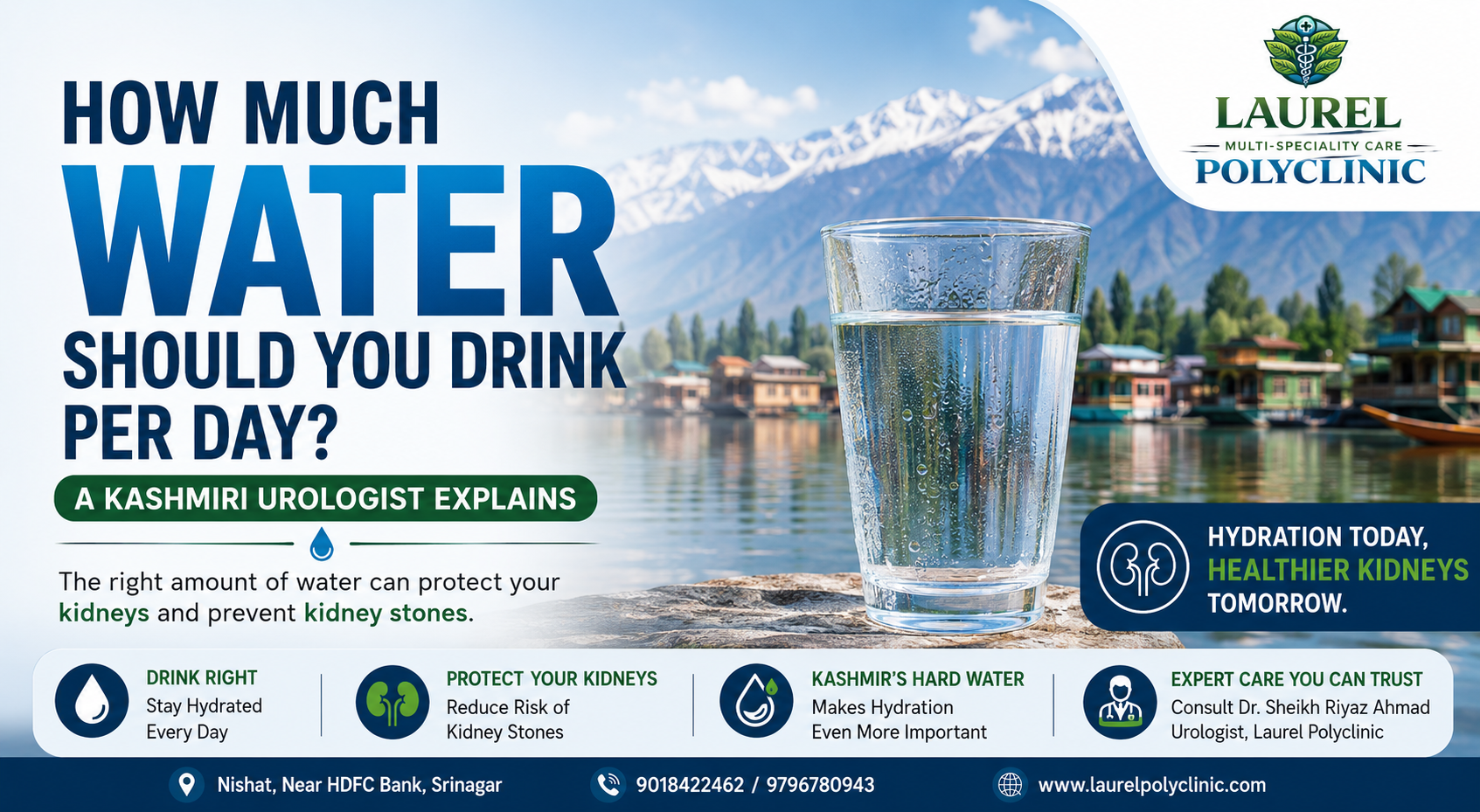
How Much Water Should You Actually Drink Per Day? A Kashmiri Urologist Explains”
Published by: Dr. Sheikh Riyaz Ahmad, MBBS, MS, MCh (Urology)
Consultant Urologist, Laurel Polyclinic, Srinagar

You have probably heard the advice: drink 8 glasses of water a day. But is that actually accurate? And does it apply to someone living in Kashmir—where the water itself may be part of the problem?

As a urologist practicing in Srinagar, one of the most common questions I hear is: How much water should I drink? The honest answer is that it depends. However, for people living in Kashmir, proper hydration is especially important because of the region’s hard water and the higher risk of kidney stone formation.

Why Hydration Matters More in Kashmir

Kashmir’s water is largely sourced from rivers, springs, and the Dal Lake watershed and is generally classified as hard water, containing higher levels of calcium and magnesium. When fluid intake is low, these minerals become concentrated in the urine and can crystallize, leading to kidney stones.

Local Risk Factors

  • Hard water contains elevated calcium and magnesium.
  • Low water intake increases urine concentration.
  • Kidney stones are among the most common urological conditions seen in Srinagar.
  • Adequate hydration is the most effective preventive measure.

Is the “8 Glasses a Day” Rule Correct?

The popular “8 glasses a day” recommendation is a rough guideline and is not strongly supported by modern clinical evidence. Current urology guidelines focus on urine output rather than a fixed amount of water intake. The goal is to produce 2–2.5 litres of urine daily, which generally requires drinking more than that amount because fluid is also lost through sweating, breathing, and digestion.

How Much Water Should You Actually Drink?

General Adult Recommendation

For most healthy adults in Srinagar:

Aim for 2.5–3 litres of fluid per day, with water being the primary source.

Adjust Your Intake If:

Summer (April–September):

  • Increase to 3–3.5 litres daily.

Physical Activity:

  • Add approximately 500 ml per hour of intense exercise or physical labor.

Winter:

  • Do not reduce water intake.
  • Cold weather often suppresses thirst despite ongoing fluid requirements.

History of Kidney Stones:

  • Your urologist may recommend 3 litres or more daily.

Diabetes or High Blood Pressure:

  • Consult your physician regarding your ideal fluid target.

Check Your Hydration with Urine Colour

A simple way to assess hydration is by looking at your urine:

✅ Pale straw-yellow = Well hydrated
⚠️ Dark yellow or amber = Dehydrated
⚠️ Completely clear urine = Possible overhydration

If your urine remains dark by midday, you are likely not drinking enough water.

Simple Daily Hydration Plan

  • Morning: 1 glass before tea or breakfast
  • Mid-morning: 1–2 glasses
  • Lunch: 1 glass
  • Afternoon: 1–2 glasses
  • Evening: 1 glass with dinner
  • Before bed: Half a glass

Total: Approximately 2.5–3 litres per day.

What About Water Quality?

Boiling water does not significantly reduce mineral hardness. Individuals with recurrent calcium oxalate kidney stones may benefit from using a reverse osmosis (RO) filter.

Avoid replacing water with:

  • Soft drinks
  • Energy drinks
  • Excessively sweet tea

These may increase kidney stone risk and place additional stress on the kidneys.

When Should You See a Urologist?

Seek medical advice if you experience:

  • Severe flank or back pain
  • Blood in urine
  • Burning while urinating
  • Frequent or urgent urination
  • Recurrent urinary tract infections
  • Previous kidney stones
  • Reduced urine output with fatigue

Message from Dr. Sheikh Riyaz Ahmad

“The single most impactful thing any adult in Srinagar can do for their kidney health is increase water intake. It costs nothing and helps prevent one of the most painful conditions we treat regularly.”

Book a Urology Consultation

Laurel Polyclinic
Nishat, Near HDFC Bank, Srinagar
📞 9018422462 / 9796780943
🌐 www.laurelpolyclinic.com

About Author
Case studies available upon request.
Please provide information on how we can help you and we will be in touch to help meet your requirements.
    schedule

    Ready to Take Charge of Your Health?

    Get personalized care and diagnostic solutions tailored to your needs — fast, reliable, and hassle-free!